
Fairfax Released Mugshot Records
A booking photograph records how a person appeared during a specific intake. Release does not turn it into a new image or prove the outcome of the case. Fairfax Sheriff policy treats photographs of active and inactive adult inmates as records that the Public Information Officer may release. The policy also allows withholding when disclosure would jeopardize an ongoing felony investigation. Sealing, expungement, identity, nonexistence, and other legal restrictions can affect access as well.
Virginia Code § 2.2-3706 addresses law-enforcement records and routine adult intake photographs. It does not require Fairfax to publish a gallery. The official route is a focused request to the custodian that made or holds the photo. That custodian may be the Sheriff for an ADC booking or an arresting police agency for a separate intake image.
Always pair the image with a release record and court disposition. A photo alone cannot establish whether the person was released on bond, transferred, convicted, acquitted, or still held on another case. It also cannot show whether the person later returned to custody.
Use the booking or inmate ID when possible. Fairfax City, Herndon, Vienna, and county agencies can all lead a person into the ADC, but an arresting-agency number, court case number, ADC inmate ID, and VADOC ID are not the same. A precise identifier helps the custodian locate the correct image and reduces the risk of matching a person with a similar name.
Find Fairfax Released Inmate Mugshots
Fairfax does not offer one verified public gallery that covers every released person. The source depends on where the booking occurred and which agency made the image. A person may also leave the ADC by transfer rather than community release, so the next custodian's record can matter. The table keeps verified channels separate from unconfirmed ones.
| Channel | Photo status | How to access |
|---|---|---|
| Fairfax Sheriff roster or recent releases | No public photo feed verified | Do not assume a gallery exists |
| Fairfax Sheriff mobile app | No jail-info or released-photo app verified | Use official web, phone, and records channels |
| Sheriff booking record | Official request path documented | Request the adult booking photo through Sheriff FOIA and PIO |
| Arresting police agency | May hold its own image | Request the image from that agency under Virginia law |
| VADOC | Public result behavior not verified | Use official locator and records request; do not assume an archived portrait |
| VINELink | No Fairfax released-photo field verified | Use it for custody events, not as a promised photo archive |
| Government news release | Sometimes, for a specific event | Read the dated agency post and verify current status elsewhere |
Commercial aggregators may retain old images, but they are not authoritative for identity, custody, disposition, or release date. No commercial mugshot publisher is linked. A dated news photo also needs care. It shows what an agency chose to publish for that event, not a current inmate or release record.
Note: A missing online photo can reflect no gallery, a seal, an exception, or a record held by another custodian.
Fairfax Mugshot Feed Limits
No official Fairfax County Sheriff current-inmate query, recent-release list, released-person photo gallery, or jail-info mobile app was verified in the official navigation and domain sweep. A contract that once described possible public lookup functions does not prove that a live tool now exists. Communications and visitation products are not inmate-release photo databases.
This finding changes the search order. Do not spend time looking for a hidden 24-hour gallery or treating a third-party page as the Sheriff source. The Fairfax jail releases in 24 hours page explains the direct phone and record fallback for recent events. For a photo, use the Sheriff policy and FOIA route. For custody, ask for correctional status and release date.
Official navigation can change. The precise statement is that no feed or app was located as of the research date, not that Fairfax can never launch one. If a future Sheriff page appears, check its agency domain, update date, fields, and retention window before relying on it.
Request Fairfax Booking Photos
The Fairfax Sheriff FOIA page is the direct request channel. Requests may be emailed to sheriff@fairfaxcounty.gov or mailed to the published FOIA officer at the Sheriff's administrative office. Because contacts can change, confirm the live page before sending. Ask for an existing image and related identifiers. Do not ask staff to research a person or create a new report.
- Identify the person with full legal name, date of birth, inmate ID if known, and a narrow booking-date range.
- Request the adult booking photograph for that active or inactive ADC booking. Ask for an electronic copy in its existing format.
- Also request correctional status and release date so the image can be tied to the correct custody episode.
- Ask for a cost estimate before charges are incurred and request the legal basis for any withheld or redacted part.
- If the Sheriff did not create or retain the image, ask whether another known custodian holds it, then contact that agency directly.
Virginia FOIA ordinarily calls for a response within five working days, with a possible seven-working-day extension when timely production is impracticable. The Sheriff may charge reasonable actual costs and can require a deposit when the estimate exceeds $200. Narrow dates and identifiers help reduce unrelated material and redaction work. Requester eligibility rules also apply.
If a photo is withheld, ask whether the reason is the ongoing-felony-investigation exception, sealing, expungement, identity, or nonexistence. A request for a segregable image or a later production date may clarify whether the limit is temporary. Sheriff policy does not override Virginia law. The Fairfax County released inmate record process gives the matching path for status, release date, and disposition context.
Fairfax Mugshots in News
Fairfax Sheriff or Police news may include a photograph with a dated public announcement. That image can document what the agency published at the time. It cannot show a later dismissal, sentence, release, transfer, or return to custody unless the article expressly reports that later event. Check the court file and Sheriff release record before assigning present meaning to an old image.
The Fairfax Sheriff release-related news example shows the kind of dated agency context that may appear in official news.
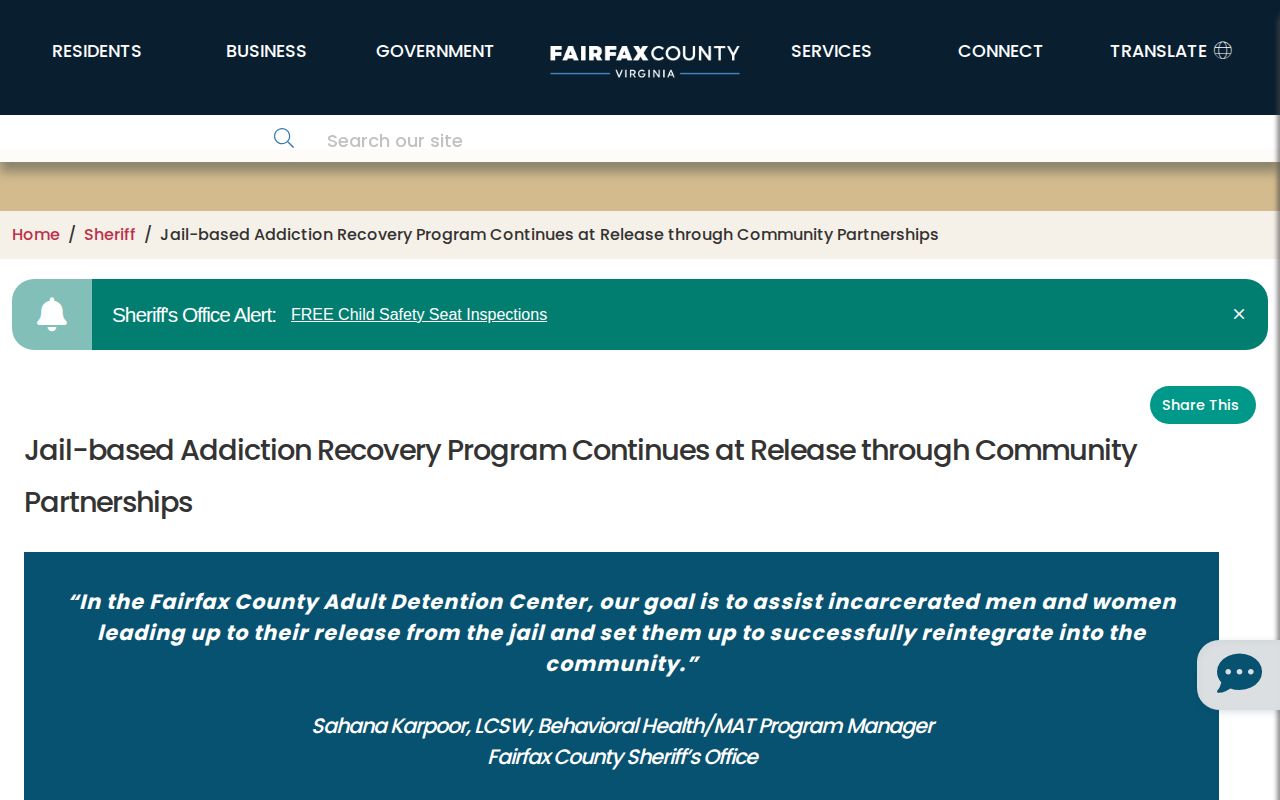
The agency page provides context for a specific release-related program, but it is not a mugshot gallery or a live custody search.
Third-party and social reposts are weaker sources. Copies can lose dates, crop context, confuse people with similar names, or remain online after official access changes. Treat them only as a lead to the government record. Do not pay a publisher to verify whether a person was released, and do not use an image to override a signed court order or custodian record.
Fairfax Mugshot Sealing Effects
Fairfax Circuit Court's expungement guidance explains that expungement removes public access and seals the record rather than physically destroying it. Later access generally requires a court order. Traditional local routes include acquittal, nolle prosequi, a qualifying dismissal, absolute pardon, and mistaken identity, but Virginia's broader sealing rules have changed. The current statute, signed order, and clerk guidance control each case.
A lawful no-record response after sealing does not prove that no booking once occurred. It means public access has changed. Provide the sealing or expungement order to the official custodian and ask what steps its current policy requires. An arresting agency, the Sheriff, a court, and a news publisher may each hold a different copy and follow a different lawful process.
Virginia Code § 8.01-40.3 creates civil liability when a publisher maintains criminal-history information and solicits, requests, or accepts payment to remove it, subject to the statute's terms and exceptions. It targets the pay-to-remove transaction. It is not a broad ban on publication, and it does not command the Sheriff to post or erase every photograph.
Note: Use the current Fairfax clerk order and custodian policy rather than assuming that one removal request reaches every copy.
Fairfax Inactive Inmate Photos
Fairfax's most distinctive mugshot source is Sheriff SOP 530. It specifically permits the Public Information Officer to release photographs of active and inactive inmates. “Inactive” matters because a released person may no longer appear in any current-custody view. The policy provides a direct official request path even after the name drops from active systems.
The exception is just as important. Release may be denied when disclosure would jeopardize an ongoing felony investigation. Protective, sealed, expunged, juvenile, medical, and security limits may also affect related records under applicable law. Ask the agency to cite the basis for a denial or redaction. If the issue is temporary, ask whether a later request could be reviewed after the investigative concern ends.
SOP 530 also identifies correctional status, release date, current charge, bond, court date, conviction date, and inmate ID as information that may be disseminated unless suppression is needed. Requesting the image with those narrow status fields helps confirm the correct person and booking. It also keeps the photo tied to a specific record rather than speculation about the person today.
If the agency supplies a photo but no release type, ask for the existing transaction field, release card, transfer sheet, or shift-log entry. Do not ask staff to guess what a code means. Request its current definition. That record can distinguish community release from movement to VADOC, another jail, federal custody, or a judicially authorized immigration transfer.
Keep the file in its original context. Note the agency, booking identifier, date obtained, and any stated limit. If a later court order seals the case or corrects identity information, return to the official custodian for current access guidance. An old copied image should not be treated as more reliable than the agency record that now governs the custody episode.